


Protein diets for weight loss are based on the fact that when the body does not accept carbohydrates, which are usually the main source of energy, it begins to actively break down fat deposits.
It should be remembered that such a diet will not solve in a few weeks or even a month all the problems accumulated over the years.This diet is also contraindicated by women with gastric problems, diseases of the cardiovascular system, kidney diseases, gout, endocrine diseases, and irregular menstruation.
Advantages and Disadvantages
There are many types of protein diets – Dukan, Atkins, etc.They all have common advantages and disadvantages.With the help of such nutrients, you can lose weight quickly, and a protein-rich diet will satisfy your hunger.Therefore, such a diet is easier to tolerate from a physical and psychological perspective.
Protein diet requires consultation with a nutritionist, otherwise it may be harmful to health.The Dukan Diet is particularly dangerous.It consists of 4 stages:
- "Attack" - You can only eat protein foods.
- “Cruise” – You can add vegetables to your protein, but not all, and only on certain days.
- "Merge" - You can include rice and pasta in your menu.
- "Stabilization," which is the final stage (including protein foods).
This system contributes to the development of gout, liver and kidney disease.Its side effects usually only appear after six months, so it is better to abandon the Dukan system and switch to a classic protein diet that includes some carbohydrate foods and vitamins.
For those who adhere to this system, the basic rules boil down to the following:
- Prioritize diets that are less restrictive in carbohydrates;
- Choose lean meats—chicken, turkey, rabbit;
- Take a vitamin complex alone;
- Be sure to include more water, bran, and low-fat fermented dairy products in your diet to avoid interfering with the digestive process.
While sausages, salami and processed foods are acceptable in many systems, they should be avoided because they contain high amounts of colorings and food additives.
Many people believe that a low-carbohydrate protein diet is good for people with diabetes.But actually that's not entirely true.For diabetics, it is recommended to slightly increase the amount of protein while decreasing the level of carbohydrates.This should only be done under a doctor's supervision, otherwise hypoglycemia may occur, leading to fainting and weakness.
Basic principles of the classic protein diet
A protein diet consists of protein foods, fiber-rich vegetables and fruits.By limiting carbohydrates, you destroy fat stores in a short period of time.Most of these systems can allow you to shed 3-10kg of excess weight in just 10-14 days (depending on your metabolic rate).
A protein diet is balanced if supplemented with vegetables.But it must be combined with physical activity.This is the only way to get consistent results, otherwise the weight lost is quickly regained.
The diet includes foods rich in protein: lean meat and fish, eggs, cottage cheese, kefir.You should definitely include a fresh green salad in your daily menu.Several times a week you should eat complex carbohydrates - whole grain porridge (buckwheat, oatmeal), maybe nuts, and even starchy vegetables.You can drink black tea or green tea, rose hip soup, and water.On this diet, you should avoid sweets, baked goods, ice cream, bananas, and grapes.
A menu for 10 days can be compiled as follows (taking into account the individual characteristics of the body).
menu
Day one:
- Breakfast: a cup of unsweetened tea and a few rye biscuits;
- Second breakfast: low-fat cheese;
- Lunch: beef stew;
- Afternoon snack: fresh cucumber, tomato and leafy green salad;
- Dinner: stew of cabbage (if there is no bloating) or a stew of other non-starchy vegetables, a glass of kefir in the evening.
second:
- Breakfast: A cup of coffee without sugar;
- The second breakfast: a small portion of rice porridge, boiled;
- Lunch: Grilled chicken tenders, vegetable salad;
- Afternoon snack: If you are allergic to citrus fruits, eat an orange or apple;
- Dinner: Carrot salad and two hard-boiled eggs.
third:
- Breakfast: coffee without sugar;
- Second breakfast: any lean meat, boiled or grilled;
- Lunch: boiled fish and vegetable salad;
- Afternoon snack: any two fruits;
- Dinner: Braised zucchini with green beans in sour cream sauce.
fourth:
- Breakfast: a cup of tea;
- Second breakfast: one portion of buckwheat porridge;
- Lunch: Pumpkin soup with croutons;
- Afternoon snack: fruit salad;
- Dinner: One serving of rice and vegetables.
fifth:
- Breakfast: a glass of milk (if tolerated) or natural yogurt, a few rye biscuits;
- Second breakfast: white omelette in the oven;
- Lunch: grilled fish with potatoes (no more than 2 tubers);
- Afternoon snack: apple or kiwi;
- Dinner: Roast beef.
sixth:
- Breakfast: a cup of unsweetened tea and an apple;
- Second breakfast: carrot salad, drizzled with oil and sprinkled with chopped nuts;
- Lunch: Boiled chicken breast and half rice;
- Afternoon snack: fruit salad, you can add low-fat yogurt to taste;
- Dinner: Boiled fish and oranges for dessert.
seventh:
- Breakfast: A cup of coffee without sugar, optional milk;
- Second breakfast: whole wheat bread and half a portion of low-fat cheese (100g);
- Lunch: Vegetable soup with croutons;
- Afternoon snack: apple or pear;
- Dinner: Shrimp Salad.
eighth:
- Breakfast: A cup of coffee with milk and no sugar;
- Second breakfast: beet salad, cucumber and light cheese;
- Lunch: grilled chicken breast, fresh vegetable salad;
- Dinner: Greek shrimp salad.
ninth:
- Breakfast: A cup of unsweetened tea;
- Second breakfast: low-fat cheese;
- Lunch: Potato salad with hard-boiled eggs and herbs;
- Afternoon snack: orange;
- Dinner: Fruit salad with apples and chopped nuts, maybe with cinnamon and a little honey.
tenth:
- Breakfast: a cup of unsweetened tea and biscuits;
- Second breakfast: Oatmeal with berries;
- Lunch: Caesar salad with chicken tenders, optionally with natural yogurt dressing and spices;
- Afternoon snack: half cheese (100g);
- Dinner: Boiled fish, fresh vegetable salad.
You can add vegetables to any of the protein dishes on this menu—even to cottage cheese, if you add a little salt when cooking.
Popular recipes
It's important to choose recipes in advance that will give you more variety in your meals throughout the week, which will help avoid the psychological discomfort that inevitably comes with strict dieting.
Potato salad with eggs and herbs
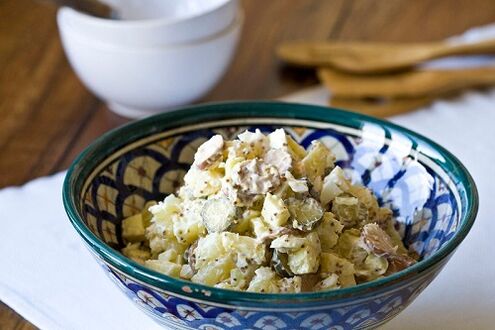
Require:
- Potatoes – 2;
- Quail eggs – 2-3 (or one chicken);
- Garlic cloves (pre-chopped) – a few slices;
- Green onions, parsley, basil, rosemary - as needed.
Preparation:
- Boil the potatoes in their skins, cool and peel.
- Chop the vegetables very finely.
- Combine all these ingredients and season with a sauce made from vegetable oil, mustard beans and a splash of grape or apple cider vinegar.
- The finished salad is decorated with "petals" of hard-boiled eggs.Serve at room temperature.
green vinaigrette
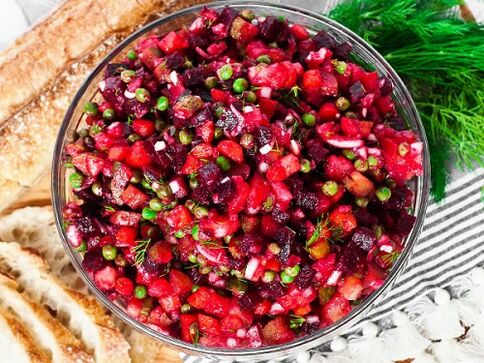
It can be served as a side dish with any meat.
For one serving you will need:
- Cauliflower – 50 g;
- Broccoli - 50 g;
- Watercress - a small bunch;
- Cucumber – 1;
- bell pepper – 1;
- Celery stick - 1;
- Onions - several feathers;
- Boiled eggs for garnish - optional;
- Vegetable oil, mustard, salt and pepper – for seasoning.
Preparation:
- Boil the cabbage in salted water, drain, cool and dry.
- Cut and place in a salad bowl.
- The rest of the ingredients are added raw.
- Salad is served at room temperature.
At least when on a protein diet, you should give up mayonnaise, just like ketchup.Tomato sauce or dressings based on natural yogurt and herbs can be prepared at home.It is recommended to consume homemade products even after stopping the diet.